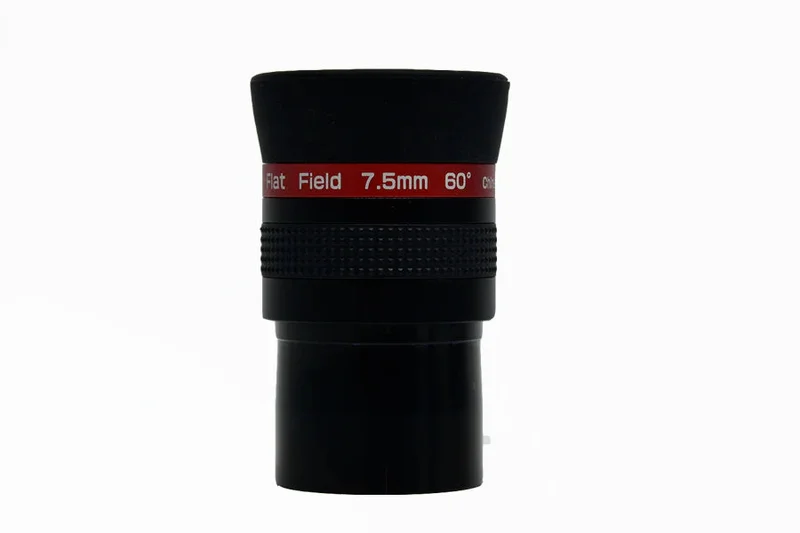
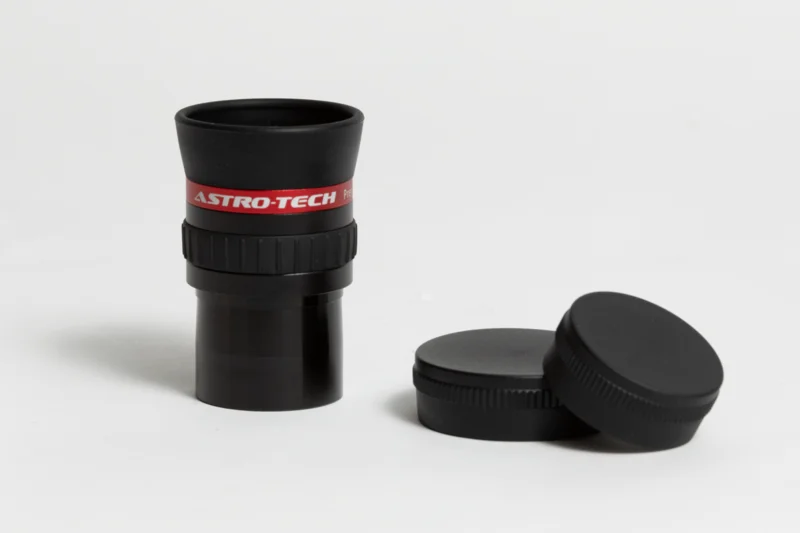
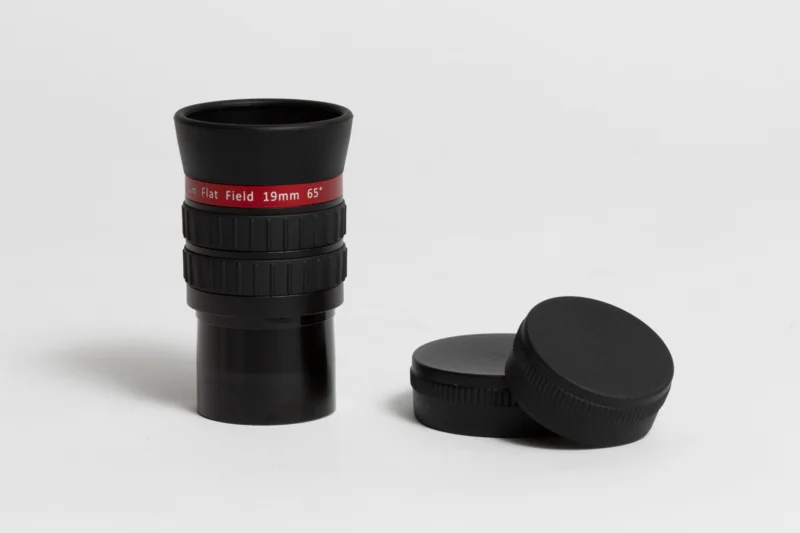
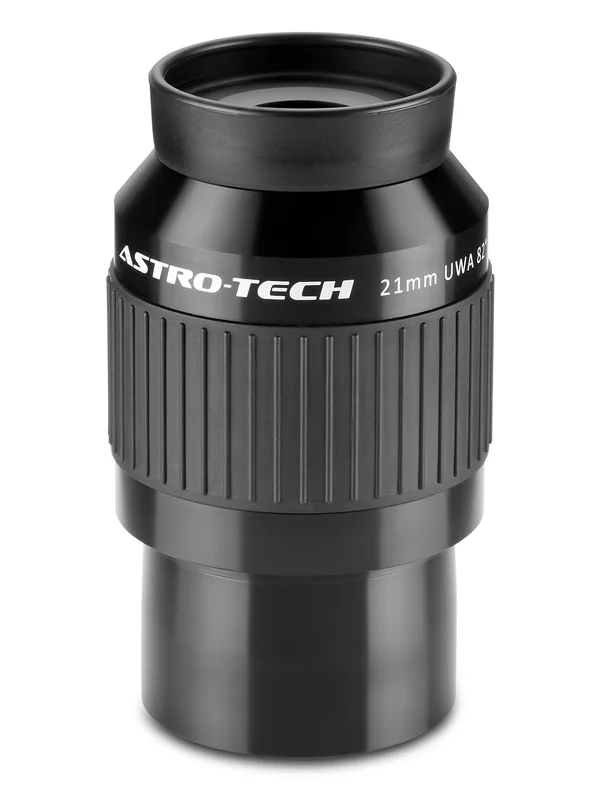
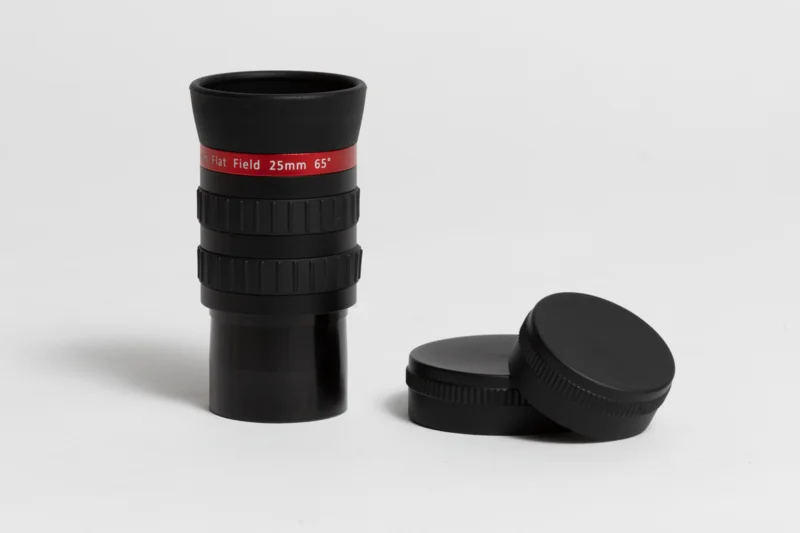
Description
Not at all. The practical useful magnification limit for an 8-inch is roughly 50 per inch of aperture about 400 in theory, though seeing usually limits you to 200300. At 160, you’re comfortably within the useful range for most nights.
Can I use this for both planetary and deep-sky observing?
That’s exactly what it’s designed for. It’s too much magnification for rich star fields and wide-field nebulae, but perfect for planetary nebulae, compact galaxies, and globular clusters. For planets, it’s the “all-around” magnification that works without demanding perfect conditions.
What about binocular observing?
The 7.5mm works well in binocular viewers for planetary work. Flat field design is especially valuable in binoculars, where both eyes benefit from the corrected edge performance. Lightweight, comfortable eye relief, and a reasonable price point make it practical to buy in pairs.
Can I Barlow this eyepiece?
A 2 Barlow would put you at 3.75mm effective focal length that’s extreme magnification for all but the steadiest nights. More practical use: pair a 2 Barlow with the 7.5mm to get an effective 3.75mm eyepiece, bridging the gap between the 7.5mm and 5.5mm. Or don’t Barlow it use the three focal lengths on their own.
Accessories
- Sky Rover PF 5.5mm 1.25″ eyepiece Higher magnification for the best seeing nights, or when you need to push in on fine planetary detail.
- Sky Rover PF 3.5mm 1.25″ eyepiece Maximum magnification for exceptional seeing. Planetary specialist.
- Standard 1.25″ OIII or UHC nebula filter Dramatically improves contrast on emission nebulae at this magnification. One of the most valuable additions you can make to a deep-sky setup.
- Standard 1.25″ light yellow (#8) or blue (#80A) planetary filter Enhances planetary contrast, especially useful on Jupiter and Saturn.
Final Thoughts
The 7.5mm is the eyepiece that belongs in almost every observer’s kit. It’s not the extreme specialist that the 3.5mm or 5.5mm are, but that’s the point it’s the magnification range where most observers find themselves observing most often. It works on average nights. It shows planetary detail, deep-sky structure, and double stars. It’s comfortable to use for extended sessions. And at this price point with this optical quality, you’re getting a flat field design that most observers would have to pay three times as much for just a few years ago. If you’re building a PF set, start here.
Tech Details:
| Focal Length | 7.5mm |
| Apparent Field of View | 60 |
| Field Stop Diameter | 8.6mm |
| Optical Structure | 6 elements in 4 groups, fully multicoated |
| Eye Relief | 16mm |
| Barrel Size | 1.25″ |
| Filter Threads | Yes standard 1.25″ |
| Weight | 85g (3.0 oz) |
| Eye Cup | Folding rubber |
| Coating | Fully multicoated (FMC) |
Reviews
There are no reviews yet.