Description
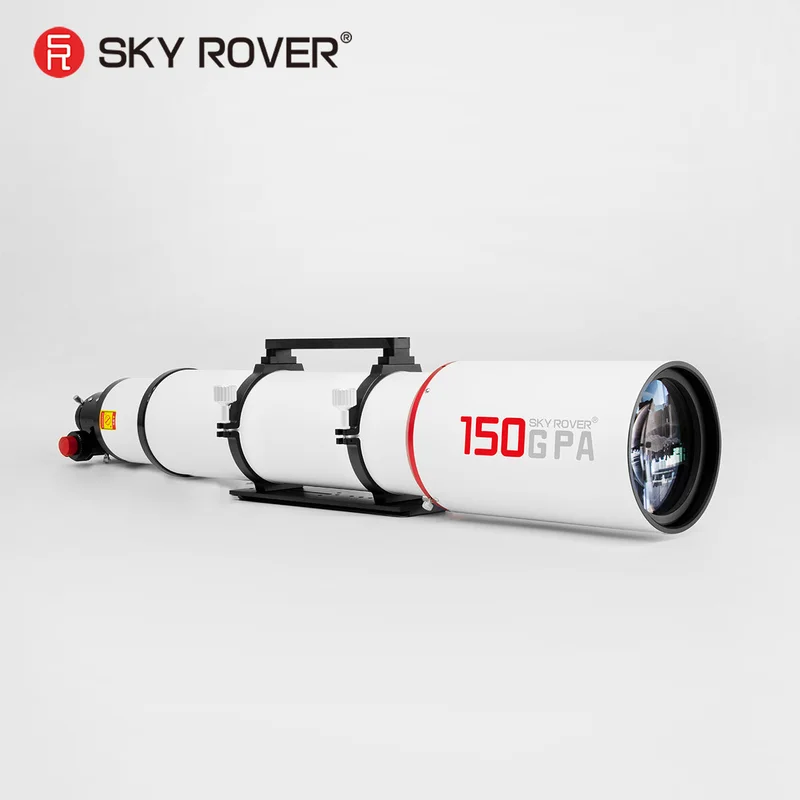
A 150mm triplet adds a third element for tighter color correction and a flatter native field advantages that matter most for dedicated wide-field deep-sky astrophotography. For visual observing, planetary work, and lunar observation, a well-corrected ED doublet at f/8 delivers performance that most observers cannot distinguish from a triplet at the eyepiece. The doublet’s advantages are significant: lighter weight, higher native transmission (fewer glass surfaces), simpler construction, and substantially lower cost. The 150 GPA weighs noticeably less than most 150mm triplets, and a doublet at f/8 is easier to cool down fewer glass elements to reach thermal equilibrium means you’re observing sooner.
Recommended Accessories
- Sky Rover 2″ Diagonal (SR2D): Essential for comfortable visual observing. The 2″ diagonal passes the full light cone to wide-field eyepieces and keeps the image bright and unvignetted. A must-have for a scope of this focal length.
- Sky Rover XWA 9mm Eyepiece: 100 apparent field at 133 an immersive view that’s perfect for deep-sky objects through 150mm of aperture. The wide field makes finding and framing targets easier at a magnification that starts revealing real detail.
- Sky Rover UWA 7mm Eyepiece: 82 field at 171 the sweet spot for planetary observing with the 150 GPA. Enough magnification to show genuine planetary detail on most nights, with a wide enough field to keep tracking comfortable.
- Sky Rover XWA 20mm Eyepiece: 100 field at 60 a walk-through-space view for star clusters, nebulae, and Milky Way sweeping. At 150mm aperture, the view through a 100 eyepiece at low power is genuinely stunning.
Final Thoughts
The 150 GPA is the telescope you buy when you’ve decided that six inches of clean refractor aperture is worth the commitment but you’re not willing to build a permanent pier to get it. At f/8, the doublet formula delivers chromatic correction that will satisfy the most critical visual observers, and the 1200mm focal length reaches planetary magnifications that smaller scopes cannot touch. It’s not the lightest scope in the GPA lineup, and it won’t live by the back door for impulse observing sessions. But on the nights when you set it up properly, let it cool down, and point it at Jupiter or the Moon or a tight double star those are the nights that remind you what a big refractor can do that nothing else quite matches. Six inches, unobstructed, with no central obstruction scattering light. Just clean glass and sky. That’s what you’re buying, and it delivers.
Tech Details:
| Brand | Sky Rover |
| Model | 150 GPA (General Purpose Air Series) |
| Aperture | 150mm (5.9″) |
| Focal Length | 1200mm |
| Focal Ratio | f/8 |
| Optical Design | Air-spaced Super ED doublet apochromat |
| Glass Type | Super ED (FCD-100) |
| Optical Coatings | Fully multi-coated (FMC) all air-to-glass surfaces |
| Focuser Type | 2.5″ CNC dual-speed rack-and-pinion |
| Focuser Travel | ~90mm |
| Extension Tube | Removable (tool-free) |
| Dew Shield | Retractable |
| Tube Material | Aluminum alloy |
| Min. Length (retracted) | ~1092mm (43.0″) |
| Max. Length (extended) | ~1309mm (51.5″) |
| OTA Weight | ~23.6 lbs (10.7 kg) |
| Total Weight (with rings, dovetail & adapter) | ~26 lbs (11.8 kg) |
| Mounting System | Dual tube rings + Losmandy dovetail plate |
| Theoretical Resolution (Dawes) | ~0.77 arcseconds |
| Lens Cell Engraving | 150MM F/8 SKY ROVER DOUBLET APO FMC SUPER ED SN:XXXXXXXX |
| Included Accessories | Extension tube, 2″ to 1.25″ adapter, dual tube rings, Vixen dovetail, handle, finder base |
| Packaging | Pearl cotton protective packaging, double-layer cartons |
Reviews
There are no reviews yet.